
.jpg)
Surface modeling can be defined as one of the core aspects of 3D designs and CAD processes today, as it makes it possible to construct very intricate and aesthetically pleasing forms of various surfaces. Surface modeling contrasts traditional modeling processes in that it focuses on constructing an object based on its outer surface, which is essential in cases when aesthetics and functionality play a key role.
From car bodies to planes and electronics, surface modeling is one of the key aspects that make it possible to create such objects as we know them today. While solid modeling involves creating a shape using volume, surface modeling offers more versatility in this case.
In this article will explore what surface modeling entails, what kinds of methods can be used for this process, its benefits, and how it can be integrated into the CAD process in general and construction sequencing in particular.
Understanding the Basics of Surface Modeling
Surface modeling is one method of 3D modeling where the objects are designed based on their outer surfaces as opposed to the inner spaces. To put it simply, it deals with the creation of the skin of an object, which does not require the inclusion of what is happening inside.
Surface modeling becomes more significant during the design of complex structures whose shape, curvature, and quality need to be precisely determined. As compared to volume modeling, surface modeling provides more flexibility to the designer.
How Surface Modeling Differs from Other Modeling Methods
For a better understanding of surface modeling, one needs to make comparisons between surface modeling and other types of 3D models:
- Wireframe Modeling: Wireframe modeling describes an object based on its lines, edges, and curves. Although it provides a basic structure of an object, it fails to show any surfaces on it and does not provide any sense of realism or depth.
- Surface Modeling: Surface modeling is built around wireframe modeling with the addition of surfaces between curves and lines, resulting in a more realistic description of the shape of an object.
- Solid Modeling: It refers to the modeling of complete objects based on their physical characteristics, such as their volumes and masses.
Purpose of Surface Modeling
There are cases when surface modeling becomes a preferred choice because of the need for high precision in complex geometry design and visualization. The areas where surface modeling can be used include the following:
- Complicated shapes with the need to accurately manipulate surfaces and curves
- Curvy organic forms are found in various products in product and industrial design
- Fluid surfaces with aerodynamics are used in the automotive and aviation industries
- Products requiring high visual appeal and accuracy
The Role of Surface Modeling in CAD Design
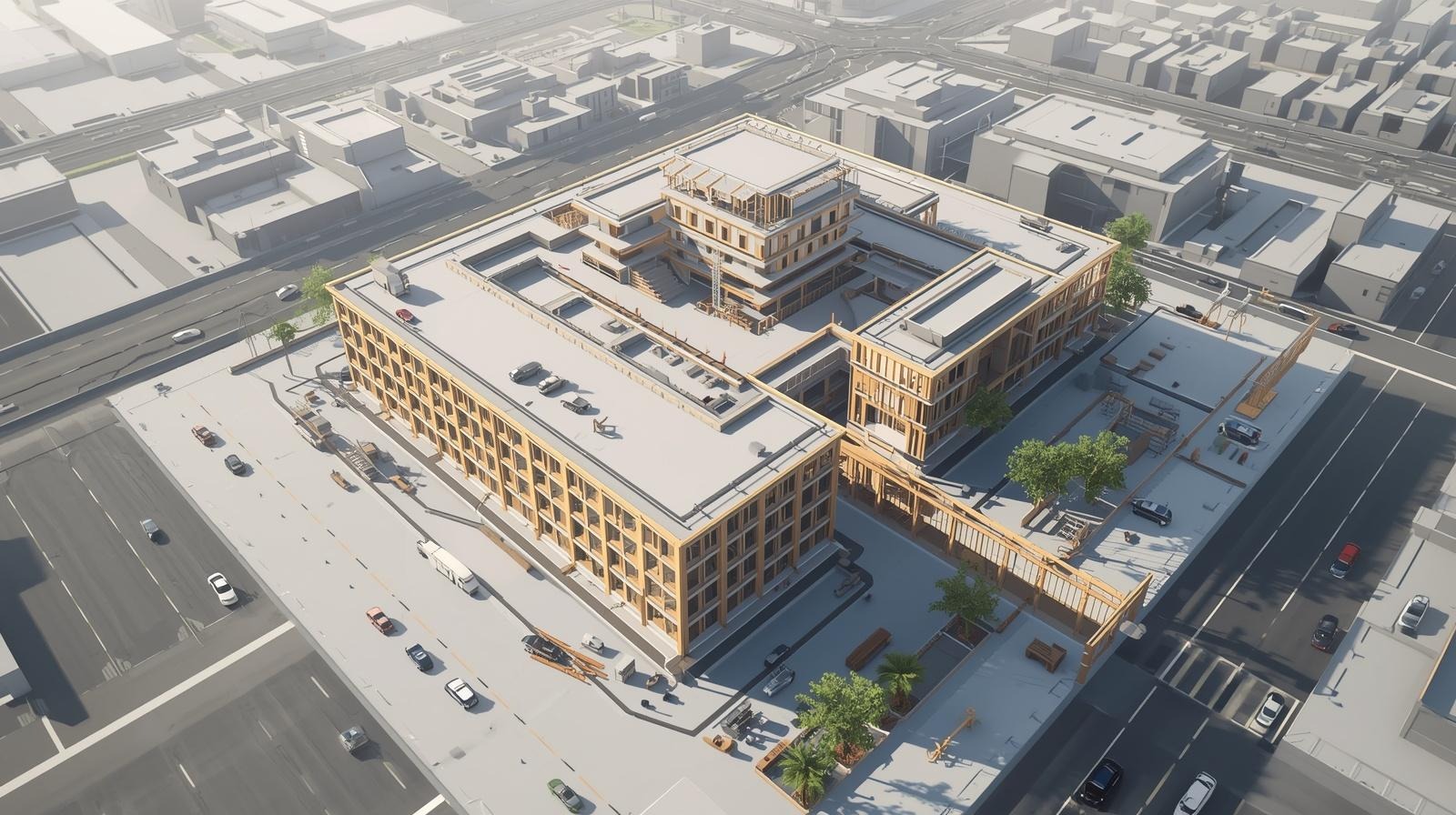
Surface modeling within the realm of CAD software is of utmost importance when it comes to transforming designs into feasible objects. Due to its concentration on accurate surfaces, it allows the designer to be able to see the final product from its beginning phase. In the current world of design, especially within AEC, automotive, and industrial design, surface modeling is necessary.
Key CAD Software Tools for Surface Modeling
Many CAD software tools provide surface, such as AutoCAD, SolidWorks, CATIA, Siemens NX, Fusion 360, and Rhino. All of these CAD software applications use sophisticated approaches for surface creation through methods like NURBS modeling, lofting, and surface blending.
Advantages of Surface Modeling in CAD Workflows
- Visualization Improvement: With surface modeling, it is possible to create detailed and visually appealing models that are useful for communicating designs among all project participants.
- Control Over Precision and Continuity: Through sophisticated control over surface modeling precision and continuity (e.g., G0, G1, and G2), problems in performance and manufacture can be addressed successfully.
- Prototyping and Verification: Good surface geometry allows performing simulations and creating prototypes that are capable of detecting design flaws early in the development process.
- Form and Function Optimization: In products where aesthetics and functionality are both necessary, surface modeling offers opportunities to strike a perfect balance between both aspects.
Key Components and Techniques Used in Surface Modeling
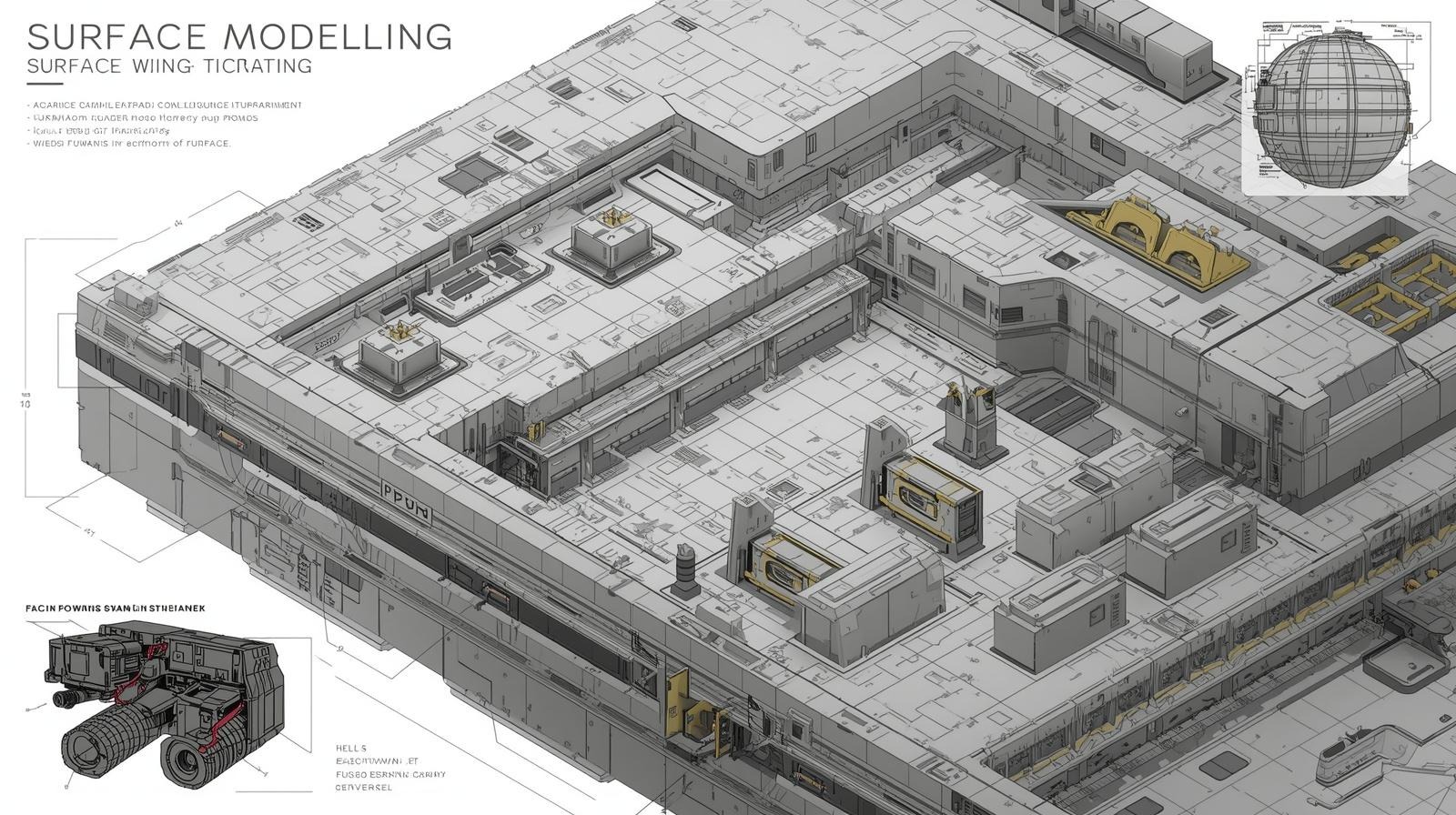
Surface modeling involves both mathematically precise calculations and flexible design capabilities. Knowledge about surface modeling fundamentals and methods is important to create good-quality and accurate 3D models.
Control Points and Curves
The key elements in surface modeling are curves that specify the shape, boundaries, and general flow of the surface.
The different types of curves that are used in surface modeling include splines, B-splines, and NURBS curves, all of which have different control options available. The curve in this case is controlled by means of control points that guide the curve’s behavior.
Control points can be manipulated to achieve the desired results regarding the shape and surface of the model being created.
Surface Patches and Lofting
It is almost impossible to create a complex three-dimensional surface at once. In practice, such surfaces are created using many smaller sections called surface patches.
There are several principal approaches that are applied for the generation of such surfaces:
- Lofting: Generation of a surface connecting two or more cross sections
- Sweeping: Generation of a surface along a specified path from a profile curve
- Blending: Creation of smooth connections between surfaces
By applying these approaches, it is possible to develop even quite intricate surface geometries in a controlled manner.
NURBS (Non-Uniform Rational B-Splines)
One of the highly advanced mathematical techniques is NURBS (Non-Uniform Rational B-Splines), which is widely applied in surface modeling.
Its features include:
- Highly precise and flexible designing
- Highly accurate representation of curves and surfaces
- Curvature continuity between surfaces
The reason why NURBS is highly advanced and is often applied in many industries, including automotive, aerospace, and industrial design, is because of the fact that its surface definition can be described mathematically.
Types of Surface Modeling
It is important to understand different surface models because each type of surface model has different abilities that can fit in certain applications. Therefore, the choice of the model will depend on the complexities and requirements of the designs. Below is the detailed description of the different types of surface modeling:
Freeform Surface Modeling
This type of modeling technique is extensively utilized in designing complicated organic models and artistic ones. The designer is allowed much freedom with respect to curvatures. Therefore, it is an excellent modeling technique in applications like car bodies, helmets, and the design of household products, where aesthetic considerations play an important role.
Parametric Surface Modeling
This method emphasizes accuracy and control. Using the method, the surfaces are created based on the constraints and parameters so that if there are any modifications done to the dimension, the geometry will automatically be modified. It is very useful when it comes to designing engineering parts and repeated designs.
NURBS Surface Modeling
This approach provides a combination of flexibility and mathematical exactness, and it can be called one of the most efficient methods in surface modeling due to its high potential. This method allows modeling smooth and precise surfaces with high accuracy; therefore, it is widely recognized as the standard technology. Such technology is usually applied to create designs of complex geometry, such as aircraft parts and marine constructions.
Hybrid Modeling
The Hybrid Modeling concept is an ideal way of combining surface and solid modeling in order to facilitate the process of product development in its entirety. For instance, during the design of a car interior, surface modeling can be applied to achieve aesthetically pleasing exterior features, while solid modeling enables the creation of the interior features that have tangible attributes.
Advantages of Surface Modeling in CAD
The surface modeling technique is one that provides several benefits that cannot be ignored when it comes to CAD . Through this technique, one can exercise total control over the geometry and the curvature, thereby producing high-quality designs that serve their intended purposes both visually and functionally. It is an integral part of any industry where the above factors matter a great deal.
1. Formation of Complex Shapes: Surface modeling allows for the creation of complex shapes, which cannot easily, or even possibly, be created using the solid modeling method. The application of surface modeling in such cases would be highly useful for all users.
2. Better Aesthetic Control: An important feature that is inherent within the surface modeling process is the capability to create aesthetically pleasing designs. The designer has the opportunity to control the curvatures, surface properties, among other factors, which is very appropriate for use in industries like the automotive industry.
3. Improved Simulation and Testing: With proper surface geometry, simulation becomes more accurate. Such simulations include structural as well as aerodynamic tests. The designers are then able to gauge the efficiency of their design even before actual production begins.
4. Seamless Design Iterations:: The surface model is quite versatile in nature; hence, making changes to the design does not require starting from scratch but instead can lead to quick iterations and design optimization.
5. Integration into the Engineering Process: The surface modeling process is completely compatible with solid modeling and other CAD-related processes that form part of an entire product design process, where designers can proceed from conceptual design through engineering and fabrication.
Limitations and Challenges of Surface Modeling
In spite of the numerous benefits of the approach, surface modeling also faces several problems and limitations that must be taken into account by designers and engineers. The high degree of flexibility and precision is achieved through the necessity to have a better understanding of the geometrical nature of the surface modeling.
1. Complexity: As opposed to other types of computer-aided modeling, surface modeling implies greater complexity. The design process involves a better knowledge of surfaces and their properties, which makes the approach preferable for experienced users only.
2. Time-Consuming Modeling: The process of modeling high-precision and smooth objects usually requires a significant amount of time to create.
3. High Resource Usage: Modeling of complicated geometries requires additional computational power. The models with the great detail of geometry and multiple surface patches are more resource-consuming than others.
4. Problem of Creating Watertight Geometry: Another problem is connected with the difficulty of creating watertight geometries using this approach.
5. Issues with the Process of Converting to Other Models: Often, models created with surface modeling must be converted to another form (solid model). In some cases, this operation can cause problems with the geometry of the created object.
Applications of Surface Modeling in Industries
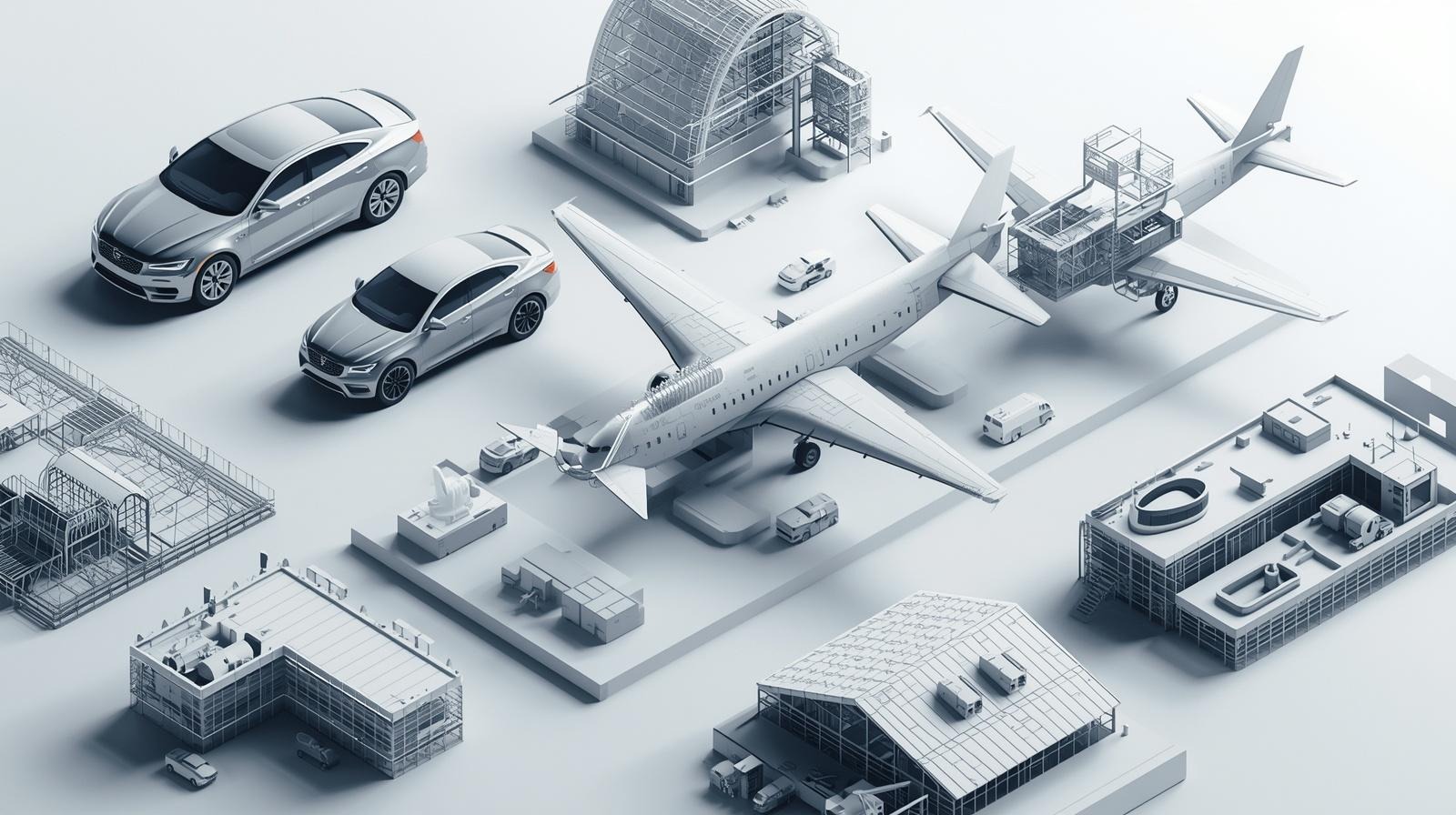
The use of surface modeling has become widespread in various sectors because of its capacity to create complex geometrical shapes. The versatility of this type of modeling makes it important in product design and construction work processes.
1. Automotive Industry: This tool is widely used in designing car bodies that include both the exterior surfaces and the interiors.
2. Aerospace Industry: In the aerospace sector, surface modeling is used to develop the shape of fuselage bodies, wing sections, and turbine blades.
3. Consumer Goods: This technology is utilized in the development of ergonomic consumer products such as smartphones, home appliances, and packaging materials.
4. Architecture and Construction: This technology is used to model intricate shapes of architectural elements, including facades and roofs. In BIM modeling, surface modeling allows one to create complex architectural elements.
Best Practices for Effective Surface Modeling
The use of surface modeling has become widespread in various sectors because of the capacity to create complex geometrical shapes. The versatility of this type of modeling makes it important in product design and construction work processes.
1. Automotive industry: This tool is widely used in designing car bodies that include both the exterior surfaces and the interiors.
2. Aerospace industry: In the aerospace sector, surface modeling is used to develop the shape of fuselage bodies, wing sections, and turbine blades.
3. Consumer goods: This technology is utilized in the development of ergonomic consumer products such as smartphones, home appliances, and packaging materials.4. Architecture and construction
This technology is used to model intricate shapes of architectural elements, including facades and roofs. In BIM modeling, surface modeling allows one to create complex architectural elements.
Conclusion
The surface modeling concept in 3D CAD design is a sophisticated technology that allows you to build highly detailed, accurate, and well-designed geometry. The concept plays a very important role in different industries like automotive, aerospace, and even construction because the performance and aesthetics of designs should be considered.
Integrating surface modeling concepts with other design processes, such as CAD and BIM, will significantly improve visualization, coordination, and construction sequencing. The development of new technologies such as artificial intelligence and generative modeling will further improve surface modeling concepts.
Techture combines surface modeling and BIM skills to provide highly coordinated and construction-ready designs for you. We know that making the right decision at this stage of your project will save you from many mistakes.
H2: FAQs
Q1: What is surface modeling in CAD?
Surface modeling in CAD refers to a process that involves designing three-dimensional shapes by creating their surface rather than their volume. Surface modeling in CAD is applied in cases that involve highly intricate designs, especially where there is a need to focus on precision. Surface modeling in CAD is important in fields such as automotive engineering and aviation, among others.
Q2: What are the main types of surface modeling?
The various methods used for surface modeling include free-form surface modeling, parametric surface modeling, NURBS surface modeling, and hybrid surface modeling. These surface modeling methods are used for different purposes, where free-form surface modeling is used for designing creative surfaces, while parametric surface modeling is used for designing controlled objects, etc.
Q3: How does surface modeling differ from solid modeling?
In surface modeling, we deal solely with the skin or surface shape of any object, whereas solid modeling involves creating the entire volume of the object along with its mass and density. Surface modeling is perfect for intricate designs or objects that are aesthetically pleasing, but solid modeling works best for engineering purposes.
Q4: Why is surface modeling important in product design?
Surface modeling is key in the field of product design due to the following reasons. One is that surface modeling helps designers come up with aesthetically pleasing, ergonomic, and aerodynamic products. Surface modeling offers accurate shape and curvature control and thus enhances the quality of the finishing.
Q5: Which CAD software supports surface modeling?
Some of the best CAD software that offers surface modeling includes Autodesk’s AutoCAD, SolidWorks, CATIA, Siemens PLM Software NX, Fusion 360, and Rhinoceros (Rhino). Such software is equipped with advanced functionalities like NURBS modeling, surface joining, and curvature studies, which allow users to develop intricate 3D models.


.jpg)