
.jpg)


Building Information Modeling (BIM) has revolutionized the way construction projects are planned, designed, and executed. What started as basic 3D digital modeling has now become a multi-dimensional approach that combines time, cost, sustainability, and facility management into a single smart model.
Two of the most important phases in this development are 4D and 5D BIM. Although these two are often used together, they have distinct and complementary uses. The distinction between 4D and 5D in BIM is particularly important for project managers, architects, planners, and cost consultants seeking to improve predictability and reduce risk.
In this article, we will explain what 4D and 5D mean in BIM, how they function, and compare them side by side, and we will discuss why it is becoming a necessity to transition from 4D construction planning to BIM 5D cost modeling.
Understanding BIM and Its Evolution
What is BIM?
Building Information Modeling (BIM) is a data-driven digital process for creating and managing information about a building or infrastructure asset over its entire lifecycle. Unlike traditional CAD drawings, BIM models are intelligent—each element of the model contains information such as dimensions, materials, quantities, and relationships to other components.
BIM is a single source of truth that facilitates collaboration between architects, engineers, contractors, and owners.
Evolution of BIM Dimensions
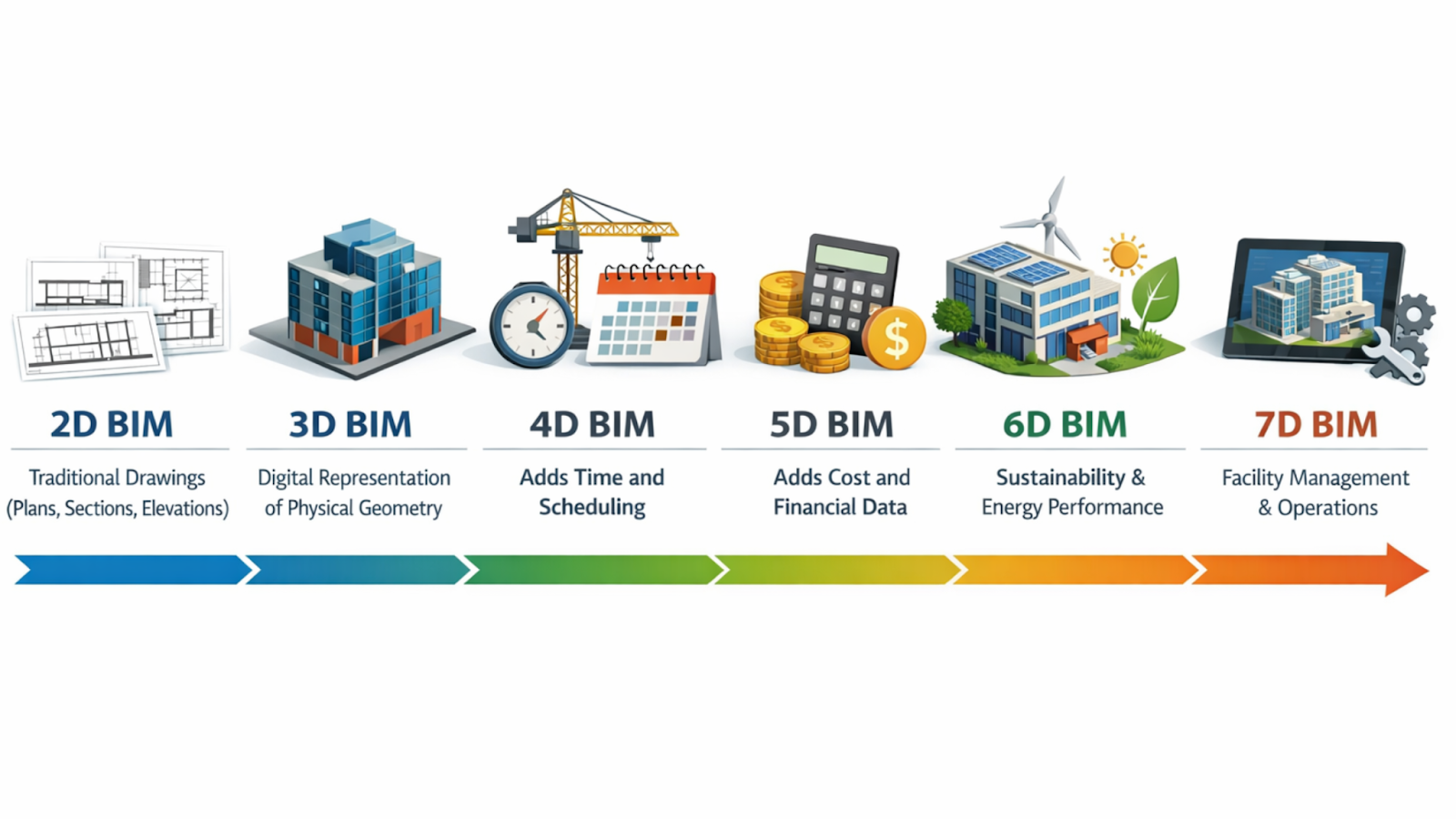
BIM has been growing by adding dimensions of intelligence to the geometry:
- 2D BIM – Conventional drawings (plans, sections, and elevations)
- 3D BIM – Digital cloud-based model of physical geometry
- 4D BIM – A 3D model + time and scheduling information
- 5D BIM – A 4D model + cost and financial information
- 6D BIM – A 5D model + emphasizes sustainability and energy analysis
- 7D BIM – A 6D model + Facilitates facility management and operation
Adding each dimension improves decision-making and project control. The transition from 3D to 4D and 5D is where BIM really becomes a project management and business application, rather than a design tool.
What is BIM: A Comprehensive Guide
What is 4D BIM?

4D BIM is the integration of time (schedule) with a 3D BIM model. In other words, it is the association of model objects with construction activities, allowing for the visualization of how a project will be constructed over time.
This is done by converting static models into dynamic simulations that represent construction sequencing, milestones, and phasing.
How 4D BIM Works in 4D Construction Planning?
- A detailed 3D model is developed (architectural, structural, and MEP)
- A project schedule (from Primavera or MS Project) is developed
- Model objects are associated with specific schedule activities
- This creates a time-based simulation of construction activities
Software such as Navisworks Manage, Synchro, and Bentley OpenBuildings is often utilized for 4D BIM.
Why 4D BIM is Important
4D BIM allows project teams to:
- Pre-construct sequencing conflicts before actual construction
- Optimize site logistics and crane positioning
- Communicate project plans to non-technical stakeholders
- Prevent delays due to poor construction coordination
Rather than interpreting difficult-to-understand Gantt charts, project stakeholders can view the project as it is being constructed virtually.
Key Benefits of 4D BIM
Enhanced Visualization of Project Timelines
4D BIM enables the visualization of schedules as simulations, which helps to better understand the construction phases.
Improved Coordination and Communication
Sequences can be visualized to better coordinate architectural, structural, and MEP disciplines.
Better Prediction of On-Site Challenges
Sequencing clashes, access problems, and trade overlaps are detected earlier, which helps to avoid site problems.
What is 5D BIM?
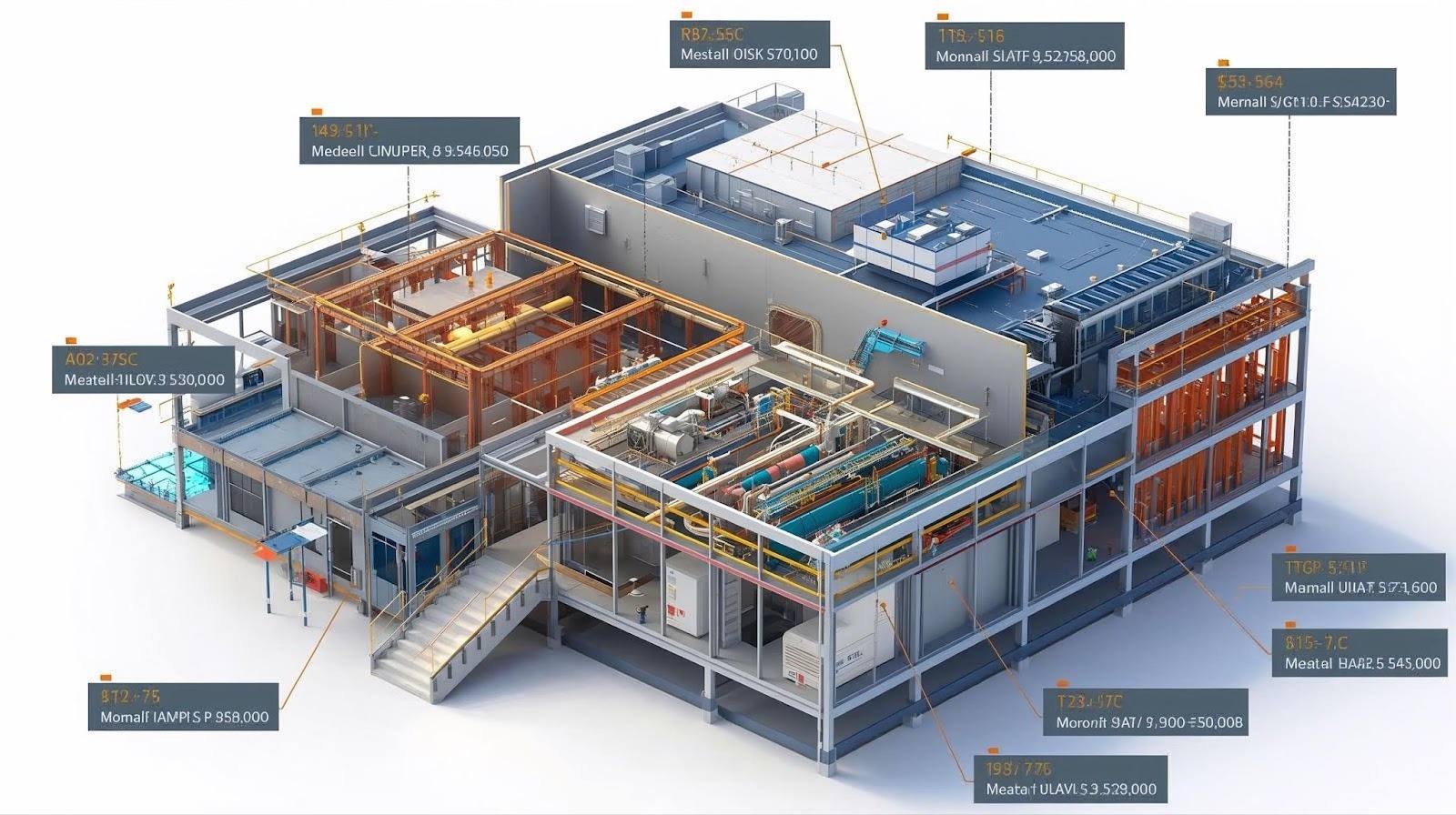
Definition of 5D BIM
5D BIM extends the functionality of 4D BIM by incorporating cost information into the model. This allows quantities, materials, labor, and time to be linked to cost information in order to estimate and track costs in real time.
At its core, 5D BIM links design + time + cost, making it a reliable control system.
How 5D BIM Works
In BIM 5D cost modeling:
- Model elements are related to quantities and unit prices
- Costs are related to construction activities and timelines
- Changes in design or construction schedules automatically calculate project costs
- Users can analyze budget effects instantly
Typical tools used are:
- Revit (quantity take-offs)
- Navisworks (4D/5D integration)
- CostX, iTWO, Vico Office (5D modeling)
Key Benefits of 5D BIM
- Real-Time Cost Estimation and Tracking
Costs are automatically updated when designs or schedules change, thereby minimizing errors and rework.
- Improved Financial Planning and Transparency
The owner and contractor have complete visibility into budgets, forecasts, and contingencies.
- Early Detection of Cost Overruns
Overruns are identified during design or planning, not during construction.
4D vs 5D BIM – Key Differences

Why the Transition from 4D to 5D BIM Matters
Although 4D BIM enhances planning, it does not mitigate one of the largest risks in the construction industry: cost uncertainty. This is where 5D BIM plays an essential role.
Enhanced Decision-Making
- With the integration of time and cost, the following benefits can be achieved:
- Assess design options from a cost perspective
- Maximize construction sequences from a cash flow perspective
- Make informed decisions rather than guesses
Advantages for Major Stakeholders
- Owners can rely on predictability and cost clarity
- Contractors can mitigate financial risk and disputes
- Estimators can work more efficiently and accurately
Mitigated Project Risk
- 5D BIM eliminates the following risks:
- Budget excesses
- Design changes in the late stages of projects
- Quantity and cost-related disputes
For complex projects, the shift from 4D to 5D BIM is no longer a necessity but a key differentiator.
The Future of BIM: Beyond 5D
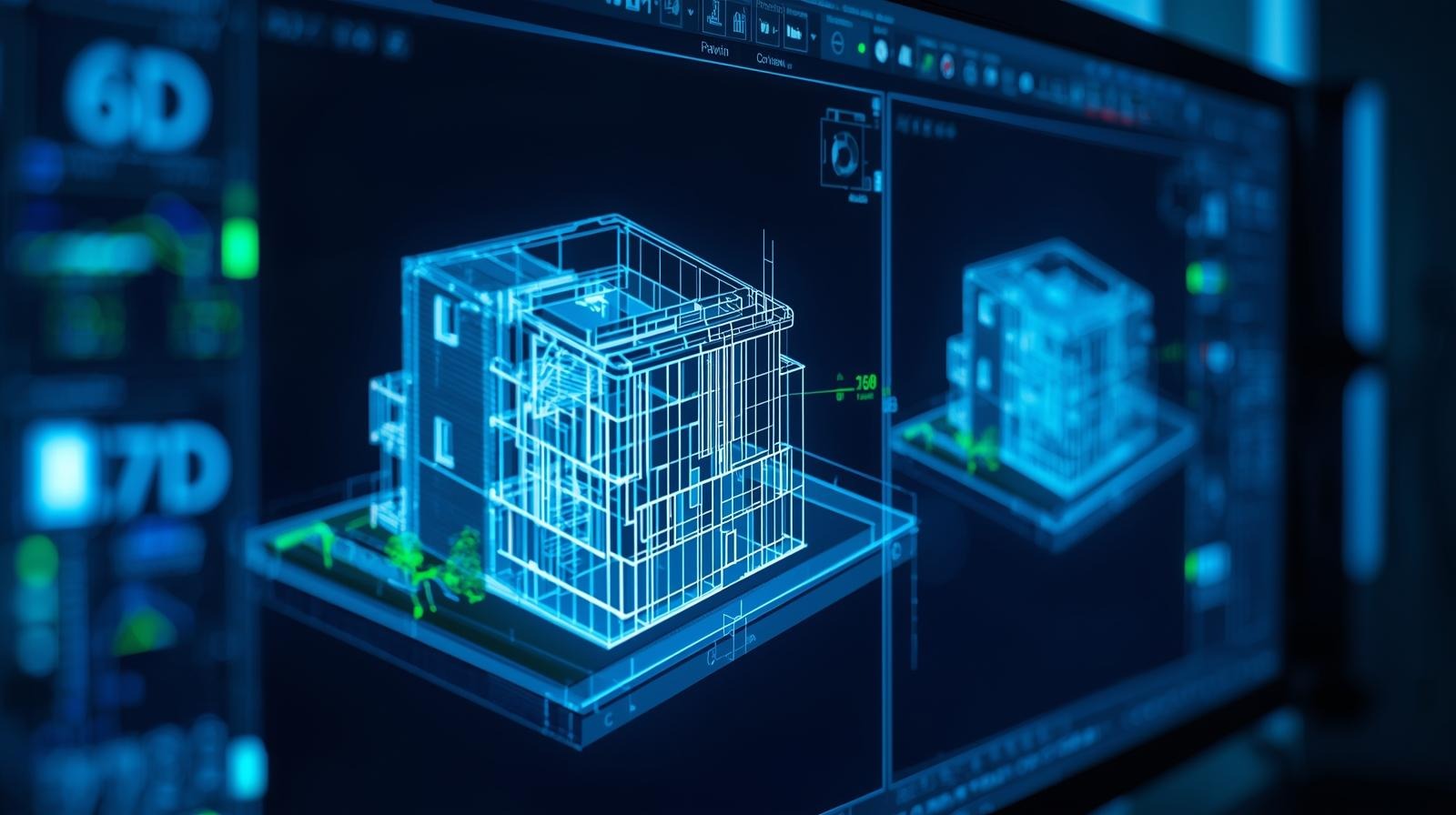
BIM is constantly developing and expanding beyond planning and cost management.
- 6D BIM – Sustainability & Energy Performance
Energy analysis, carbon footprint, and performance analysis are the main areas of focus. - 7D BIM – Facility Management
Facility management, maintenance, and operation after completion are the key areas of focus.
BIM is expected to become the backbone of smart buildings and smart construction as the rate of digital transformation picks up speed.
Conclusion
BIM is no longer just about design coordination, planning, and cost management; it is increasingly being applied throughout the entire asset lifecycle. The concept of 6D BIM brings sustainability intelligence into the model, allowing for energy consumption analysis, carbon dioxide analysis, and lifecycle-based decision support during the design and construction phases. 7D BIM extends BIM applications beyond the construction phase and into facility and asset management, using data for maintenance planning, operations, and long-term performance analysis. With the ever-increasing pace of the digital transformation of the AEC industry, BIM is increasingly becoming the digital backbone of smart construction and intelligent building operations for all types of markets.
Trusted BIM Services: 4D Construction Scheduling | 5D BIM Cost Modeling & Project Controls
FAQs
What does 4D BIM represent?
4D BIM is the integration of time and scheduling with a 3D BIM model, which allows the visualization of the construction sequence.
How is 5D BIM different from 4D BIM?
5D BIM is the addition of cost information to 4D BIM, which enables real-time cost estimation and budgeting, in addition to scheduling.
Why is 5D BIM important in construction?
5D BIM enhances financial clarity, prevents cost overruns, and enables informed decision-making throughout the project life cycle.
Can 4D BIM be upgraded to 5D BIM?
Yes. After the development of a 4D BIM model, cost information can be associated to build a complete 5D BIM model.
What tools are commonly used for 4D and 5D BIM?
The software used for 4D and 5D BIM includes Revit, Navisworks, Synchro, CostX, Vico Office, and iTWO.


.jpg)